Funding Opportunities
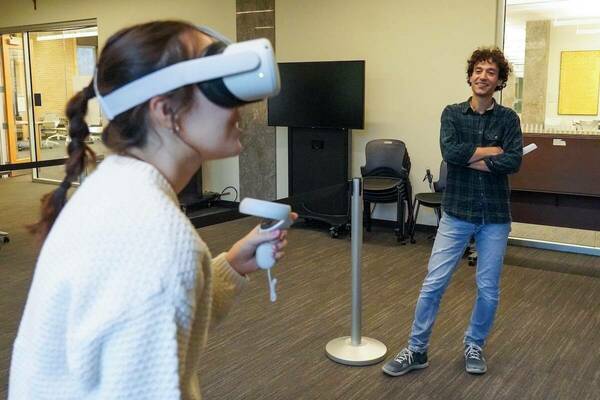
Notre Dame Learning offers two regular opportunities for funding for members of the Notre Dame faculty:
- Digital Learning Sprints (Annual Call for Proposals)
- Prochaska Fund (Rolling Call for Proposals)
In addition, we periodically issue calls for proposals for projects that support academic unit or institutional goals related to teaching and learning. Those calls will appear on this page when active.
And if you need help related to a funding question that is not addressed here, we encourage you to contact us.
2026 Digital Learning Sprints
*Please note that the application period for the 2026 Digital Learning Sprints has closed. The information that follows is for the reference of faculty considering applying for a future call for proposals.
Notre Dame Learning’s Office of Digital Learning (ODL), in collaboration with the Office of Information Technology’s Teaching and Learning Technologies (TLT) team, invites faculty to submit proposals for the 2026 Digital Learning Sprints. These short-term projects, spanning one to three months, aim to explore innovative tools, strategies, or focused topics in teaching and learning.
Expand any of the sections by clicking on the + sign. You can also watch a past virtual info session about the Digital Learning Sprints process and access the slide deck from that presentation. (*Note: This session was recorded in 2025, so project focus areas have changed. You must be logged in via Okta to view the recording and slides.)
2026 Digital Learning Sprint Focus Areas
The 2026 Digital Learning Sprints seek to advance teaching and learning initiatives that align with one or more of the following areas:
- AI Exploration/Integration: Incorporate generative AI as a tool for student research, creative work, or problem-solving.
- Flipped Classroom: Move lectures online to prioritize active, in-person engagement during class.
- Global Collaboration (COIL): Co-design and lead a shared Collaborative Online International Learning (COIL) project bringing together your ND students and a classroom at an international partner.
- Readiness Modules: Build asynchronous modules to bridge gaps in student skills, knowledge, or preparation.
- Virtual Reality Video: Use immersive video capture to allow students to observe and experience real-world scenarios or locations that are otherwise impossible to visit.
- Interactive VR Simulation: Use computer-generated, interactive environments to allow students to practice skills, manipulate objects, and make high-stakes decisions in a risk-free setting.
Eligibility
All regular faculty members at the University of Notre Dame are eligible to apply. Please note that selected applicants are required to participate in a one-day Digital Learning Sprint Accelerator on Friday, May 1, 2026.
Digital Learning Sprint Accelerator
Selected applicants are required to participate in a one-day Digital Learning Sprint Accelerator on Friday, May 1, 2026, where you will jump-start your sprint experience by:
- Defining clear learning outcomes for your project
- Establishing project scope and goals
- Identifying resources and support needed
- Developing a preliminary project plan
Following the accelerator, projects may proceed as pilots or evolve into full-scale implementations, based on feasibility and impact assessments.
Application Process
*Please note that the application period for the 2026 Digital Learning Sprints has closed. The information that follows is for the reference of faculty considering applying for a future call for proposals.
Interested faculty should submit a proposal that includes:
- Project Title
- Project Description: Outline the innovative tool, strategy, or topic you wish to explore.
- Objectives: Provide a preliminary draft of intended learning outcomes.
- Relevance: Explain how the project aligns with the 2026 Digital Learning Sprint focus areas.
- Preliminary Ideas: Share any initial thoughts on scope, resources, or potential challenges.
Proposals should be submitted by April 6, 2026.
Support and Collaboration
Successful applicants will collaborate with ODL and TLT teams to develop and implement their projects. This collaboration may include learning design consultation, media production, project management, and technology integration support. Successful applicants will also receive a stipend of $3,000.
Publication and Promotion
Recipients of Digital Learning Sprint awards may be asked to share their project outcomes in a blog post for the ND Learning website or via another public format that will then be promoted through the organization’s social media channels.
Past Project Examples
Several faculty members who previously participated in Digital Learning Sprints wrote about their projects and experiences for our website. We share their posts here not as an exhaustive list of the types of projects that can be pursued through a Digital Learning Sprint but simply as some examples of the possibilities.
- Enhancing Residential Learning with Intentionally Designed Video Lectures
- Extended Reality Advances Goals of Design Thinking Course by Letting Students Experience Uganda
- AI and Game-Based Learning Enhance Study of Spanish Language and Culture
- Designing a Writing Course in the Age of AI
- Visualizing Success: Using Video to Boost Student Lab Readiness and Confidence
Contact Information
For questions or further information, please contact online@nd.edu.
We look forward to your innovative proposals and to shaping the future of teaching and learning at Notre Dame with you.
Prochaska Fund
“The overarching goal of this Fund is to make resources available to improve faculty members’ communication, presentation, and teaching skills, thereby helping hone, improve and enhance their pedagogy in the classroom. Specifically, funds will be used to support and aid faculty in learning about and using new instructional technologies and formats, and/or supporting faculty in attending conferences and workshops focused on pedagogy in their respective disciplines. Where appropriate, this could also include one-on-one coaching for faculty from qualified experts.”
The Joe and Gina Prochaska Family Endowment for Excellence funds faculty participation in teaching development activities such as a Lilly Conference on College and University Teaching and Learning; Transforming STEM Higher Education (AAC&U); or Wakonse Conference on College Teaching. Kennesaw State University maintains a directory of additional conferences that may be eligible. This is a rolling grant; funding will be determined as applications are received.
Joe and Gina Prochaska Family Endowment for Excellence Proposal Expectations and Process
Funding recipients will be expected to:
- Participate in the approved teaching development activity.
- Participate in a meeting with Notre Dame Learning’s Kaneb Center staff to explore possible changes to their teaching practice.
- Submit a 250 to 500-word description, suitable for posting on the ND Learning website, of the experience and how participation in the activity has impacted, or will impact, their teaching.
- Work with the Learning Research practice area to explore the possibilities for the assessment of the impact of any adopted changes on student learning.
Proposals, including a description of the proposed activity and estimated budget, should be sent to learning@nd.edu.
Proposals will be reviewed on a rolling basis until the available funds are encumbered. Funding of other activities with a focus on development of pedagogical expertise or communication/teaching skills will also be considered.
Need Help Around Funding?
If you have funding-related questions that aren’t covered on this page—for instance, how to develop a teaching plan in support of a grant you have received or are planning to apply for—we encourage you to schedule a consultation to talk with us.